The 2000 US Presidential Election
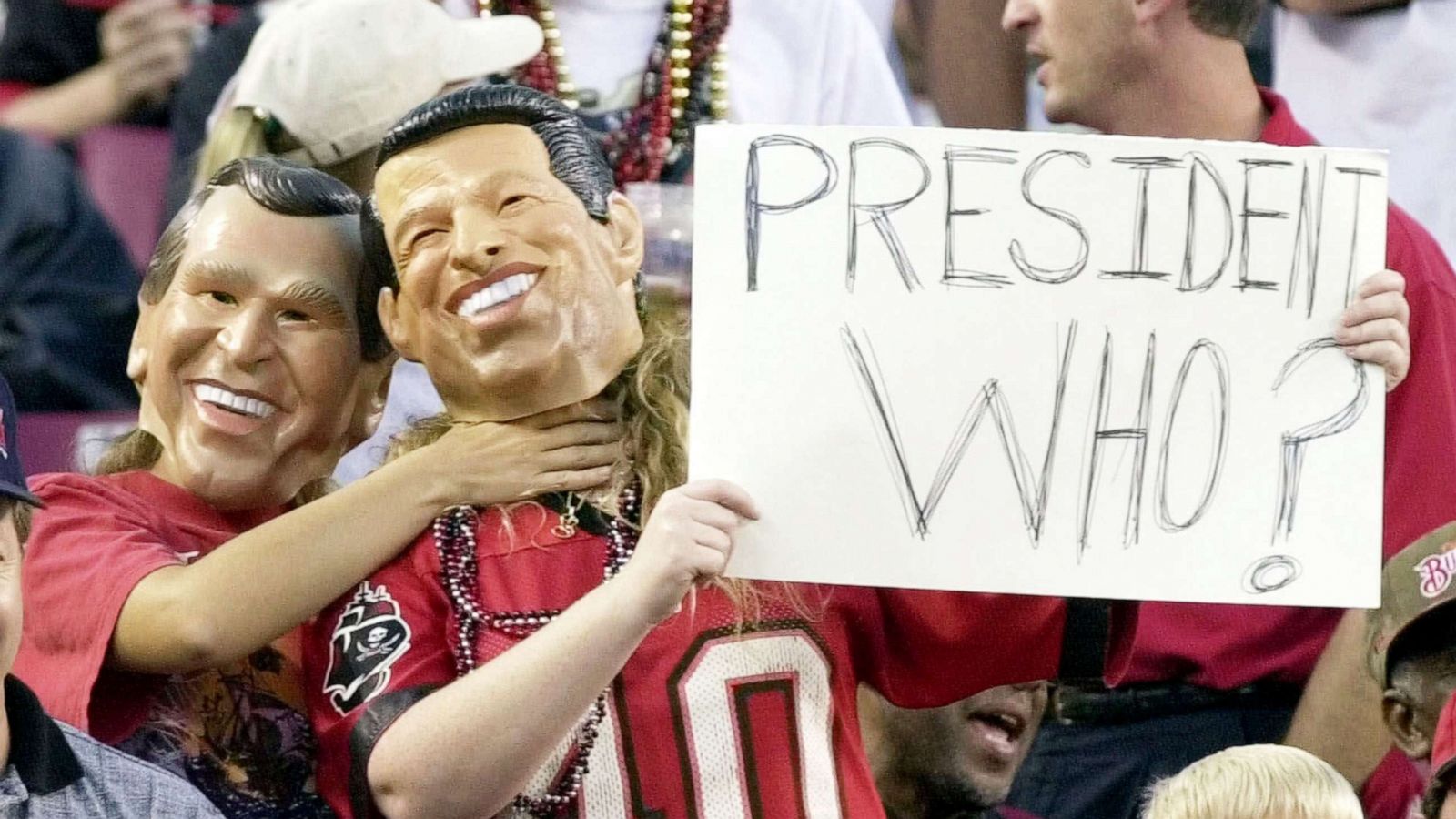
On November 5th, the United States of America will decide who will assume the Oval Office on January 20th next year. Incumbent Vice President and Democratic Presidential Candidate Kamala Harris battles against Republican Presidential Candidate and former US President Donald Trump in one of the tightest presidential campaigns in years. American politics has become polarising with a growing divide among various factions. Whether it is party affiliation, status, race, age or where you live, America is becoming less of a shining beacon on top of a hill as stated by Ronald Reagan. Divisions have always existed in America but in its modern history, these divisions came ahead in the 2000 US Presidential Elections, the first in the new millennium. Republican candidate George W. Bush won the presidency in one of the tightest margins, winning 271 electoral college votes over Democratic candidate Al Gore, who won 266 votes. Despite Gore winning the popular vote by over half a million votes. The controversy over the election and its ripple effects have shaped US elections, with the importance of specific states deciding the election and the growing lack of trust in the electoral process, becoming evident in the last two presidential elections. What made the 2000 Election so close, and what similarities can be seen in the current elections?
By 2000, the Presidency of Bill Clinton was coming to an end. Despite the economic prosperity of the 1990s and the rise of the US as the sole superpower, the last years of the Clinton Presidency were marred by the Monica Lewinsky Scandal, which led to his subsequent impeachment by the US Hosue but was acquitted by the US Senate, failing to get a ⅔ majority that would have removed him from office. Nevertheless, the Clinton presidency was a success and the Democrats were confident in their chances of keeping the White House. Vice President Al Gore was the early front-runner and faced little competition during the primaries, winning over 75% of the popular vote and 85% of party delegates, becoming the Democratic candidate during the Democratic National Convention, accepting the nomination on August 17th. Connecticut Senator Joe Lieberman became Gore’s running mate and accepted the nomination during the convention.
The Republican Party had not assumed the White House since George H.W. Bush in 1993 but had power at the US House during Clinton’s time in office. The early front-runner was the Texas Governor and son of former president George H.W. Bush, George W. Bush. US Senator of Arizona John McCain was another favourite for the nomination, being a key Republican in the Senate. Bush’s support from the Republican establishment plus his strong funding campaign helped his primary performance, despite the efforts of McCain. Who won eight states during the Republican primaries. Bush eventually won the primary, thus becoming the Republican Party’s candidate, which he accepted in early August during the Republican Party Convention. Former US Secretary of Defense Dick Cheney was chosen as Bush’s running mate, accepting the nomination during the Republican convention.

Domestic policy issues like the budget surplus, Social Security and Medicare reforms, and tax relief plans were the major discourse throughout the general election campaign. Foreign affairs events during the Clinton administration like Somalia, Serbia and Rwanda were also brought up, highlighting America’s place in the world as the sole superpower during the 1990s. Gore was the slight favourite for various reasons. He was firstly, the Vice-President of a popular presidency, and his record on the environment from his time in Congress. Despite that, Gore encountered numerous troubles that hampered his campaign. The Monica Lewinsky scandal cast a shadow over the last years of the Clinton presidency and Gore rarely used him throughout the campaign. Lieberman, Gore’s running mate, was critical of Clinton’s misdemeanour, distancing the Gore campaign from Clinton. Despite that, Gore struggled to separate himself from the president’s policies. In Florida, a Cuban boy named Elian Gonzalez was rescued and taken to shore, but his mother and twelve other people failed to survive after the boat went down. The story of Gonzalez captured national attention, particularly in Florida, a key swing state. Gonzalez was taken from his family in Florida by security personnel in April, flying him back to his family in Cuba. This angered Americans, especially those of Cuban descent, who were traditional Republican voters in Florida. Gore’s environmental position was questioned when plans to build a new airport in Homestead, Florida near the Florida Everglades. This move dissatisfied environmentalists in Florida, believing building a new airport would endanger the Everglades. The move never materialised under Clinton, with Gore failing to win support from Hispanics or environmentalists.
Despite being from a prominent political family, George W. Bush campaigned as an outsider to Washington, unsatisfied with the bureaucratic nature of Washington. A staunch conservative, Bush campaigned for “Compassionate Conservatism”. A political term coined by political commentator Doug Wead, compassionate conservatism is a political ideology where conservative beliefs and concepts are used to improve the general welfare of society. It emphasises the private sector and faith-based organisations, to provide services that cover government programs like healthcare and financial protections. Bush campaigned on tax breaks to support traditional families, changes in the American educational system (No Child Left Behind), oil drilling in the Arctic region to lower dependence on foreign oil and less intervention in foreign affairs. Bush also campaigned against abortion and same-sex marriage, supporting a constitutional amendment stating marriage is a union between a man and a woman. Like many Republicans, Bush was critical of Clinton during the Monica Lewinsky scandal, promising to bring “dignity” to the Oval Office. Bush’s campaign garnered support from those within the party, capitalists and social conservatives and his performances in the presidential debates, served him well. He presented himself as a comfortable man with his skin and plans for America, while Gore was very aggressive in the debates and too detailed with his policy plans.
Five other candidates campaigned for the presidency, the most popular with the most consequential effect in the election was Green Party candidate Ralph Nader. Nader, a political activist for consumer protection and the environment, was already a recognisable name in American politics and had campaigned for president with the Green Party in the 1996 elections. His campaign was more to the left of Gore, campaigning for a Medicare-For-All program, reforms to the criminal justice system and renegotiations to the North American Free Trade Agreement (NAFTA) for better labour protections. Though Nader knew his chances of winning were slim to none, he hoped to give 5% of the popular vote, which would grant the Green Party federal public funding for the next election. Unfortunately, Nader only mustered 2.74% of the popular vote, well below the 5% target. Democrats have accused Nader of spoiling the election for Al Gore but given how close the margin were, that could be true. It's also true that the assumption is false, as Gore lost over 10 states that Clinton won in 1996 and still performed well to win the presidency with Nader on the ballot.

On election night, Bush outperformed expectations, winning eleven states that Clinton won in the 1996 elections including Arkansas, Tennessee, Louisiana, Ohio, Missouri and West Virginia. Gore won the popular vote with over half a million votes and won decisive wins in Iowa, Wisconsin, Pennsylvania, and New Mexico. Florida was a key battleground state that was vital for victory. Both candidates were under the 270 electoral votes needed to win the presidency and Florida remained undecided. Confusion started when the news networks (ABC, CBS, NBC, CNN, FOX) declared Florida for Al Gore based on exit polls. In real-time, Bush was leading Gore in Florida, forcing the networks to retract their predictions, leaving Floria undecided. At a point, Bush was leading Florida by 100,000 votes with 85% of the votes counted, making the networks declare Florida for Bush, thus making him president-elect. Gore had accepted defeat and congratulated Bush. However, the margin of Bush’s lead in Florida narrowed to under 2,000 votes, forcing Florida to a mandatory recount by state law. In the early hours after election day, Gore called Bush to retract his concession speech and the networks put Florida back in the undecided column. Both campaigns took their legal teams to Florida to resolve the situation in the Sunshine State. Both campaigns accused each other of conflicts of interest, with Bush’s brother Jeb being the governor of Florida and Florida Secretary of State Katherine Harris being the co-chair of the Bush campaign. At the same time, Florida Attorney General Bob Butterworth chaired the Gore campaign. The situation in Florida went all the way to the Supreme Court, named Bush v Gore. In a controversial 5-4 decision, the recount in Florida was stopped, certifying the election results with Bush as the winner of Florida, thus making him president-elect and concluding one of the tightest US presidential elections in the modern era.
Since then, the 2000 elections and their effects have further shaped domestic politics in America. It solidified the divide within America that has grown distant. Over twenty states in the 2000 election were won by less than 10%, highlighting the narrow margin between victory and defeat, with Bush winning Florida by less than 0.1%. Only Barack Obama has won the presidency with 60% of the Electoral College vote this century, with 2008 the best showing of any US presidential candidate, winning close to 70% of the Electoral College vote. Battleground states like Florida in 2000, were given more importance during election season, with candidates regularly touring these states and having a large-scale operation in those battleground states to ensure the word of their campaign is out there. New battleground states have come up since. Pennsylvania, Wisconsin, Michigan, Nevada, Georgia and Arizona have become battleground states in the 2024 elections, as Florida has leaned towards the Republican party since 2016. The results from the 2000 elections created distrust towards analysts and pollsters that hasn’t shaken off. The Voter News Service, a consortium of the six major news networks, received heavy criticism for its flip-flopping of Florida during election night, which led to its disbandment in 2003. A similar tale came in 2016, when analysts and pollsters predicted a victory for Hillary Clinton, underestimating Donald Trump’s chances. Trump’s victory furthered the distrust though from party lines. For the candidates in 2000, Bush served two terms as America’s president from 2001 to 2009 while Gore never ran for president again and remained neutral in the Democratic party. He also won the Nobel Peace Prize in 2007, along with the Intergovernmental Panel on Climate Change.
The 2000 Elections are a ‘What If?’ in American history. Had Gore won the 2000 Elections, America might look different to what it is now. From the economy, the 9/11 attacks, America’s reaction to the attacks, the War on Terror, and Climate Change, Gore would have responded differently to Bush but unlikely to have changed the polarising atmosphere of Washington. A trait that has gone on since, birthing politicians like Trump, who have changed America’s political discourse. Whatever happens to November 5th, the winner will not be a popular president and will suffer backlash from the other side for not being ‘their guy’.
Comments
Post a Comment